




Dedicated to precisely empowering industrial security

Pressure Relief Panel Device - DVPNH
Keywords:
Pressure Relief Panel Device - DVPNH
Product accessories:
Detailed Introduction

To meet the energy storage industry’s demand for fire protection systems that can withstand a wide range of harsh operating conditions—including rain, snow, hail, extreme cold, and high temperatures—the market is urgently calling for upgrades to rupture discs. Consequently, it is necessary to comprehensively enhance the DVPNL rupture disc in terms of structural integrity, climate resistance, and ease of use, thereby addressing the energy storage industry’s increasingly stringent fire safety requirements.
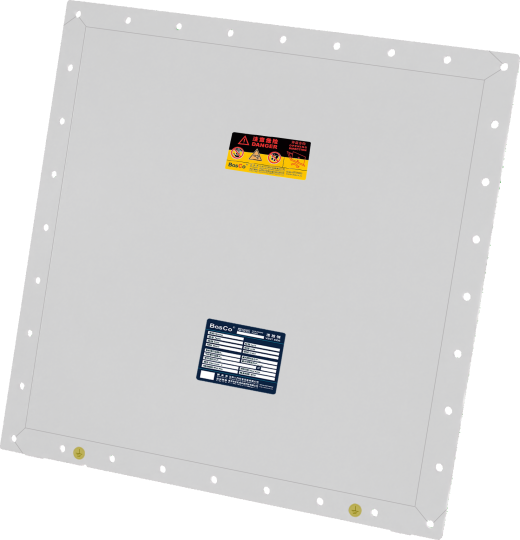

- Adopting a weather-resistant cover support structure to enhance resistance to hail and debris impacts.
- The use of new insulation materials and associated structural design reduces the internal height occupancy of the enclosure by approximately 20 mm.
- Adopting a new sealing structure to enhance sealing reliability.

- Single-layer SUS 316L
- Silicone foam, UL94 V0 (-55°C ~ +200°C)
- Includes flange + silicone foam
- Climate Protection Shield
- Thermal conductivity of thermal insulation cotton:
- ≤0.020 W/(m·K) (25℃)
- ≤0.023 W/(m·K) (100℃)
- Water-free retention and seismic design

Diameter (mm) | External dimensions (mm) | Relief area (mm²) |
230×305 | 330×405 | 68000 |
305×457 | 405×557 | 136000 |
400×400 | 500×500 | 160000 |
400×700 | 500×800 | 280000 |
457×610 | 557×710 | 274000 |
378×810 | 450×882 | 300000 |
457×762 | 557×862 | 341000 |
457×915 | 557 times 10 to the power of 15 | 414000 |
610×610 | 710×710 | 367000 |
610×762 | 710×862 | 459000 |
610×915 | 710×1015 | 552000 |

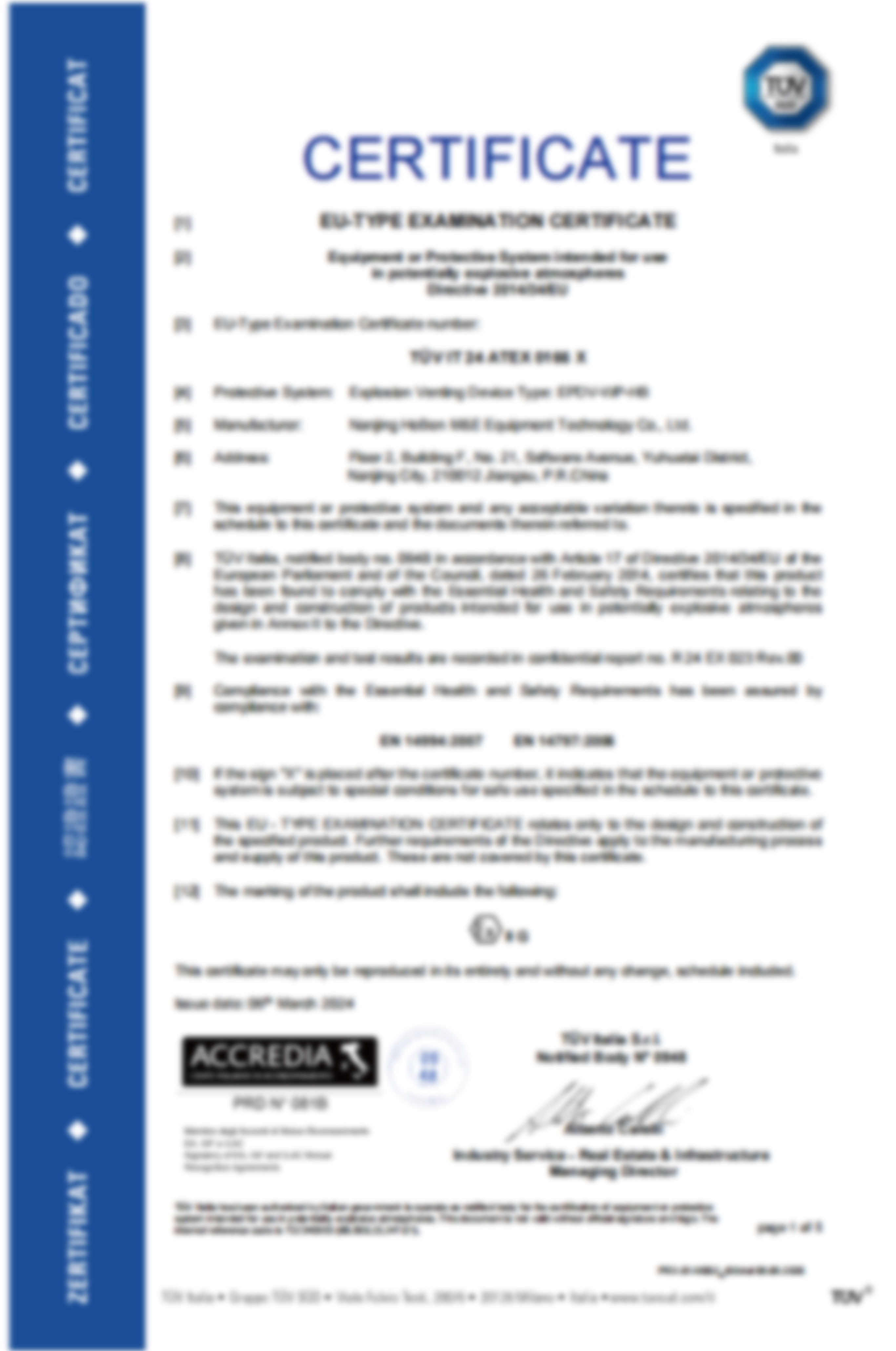
- EN14994
- EN14797
- NFPA68

First, select the type of explosion-relief panel product, and choose either top insulation or bottom insulation based on your requirements.
The thickness direction of the upper thermal-insulation venting panel extends above the mounting interface, providing superior and reliable weather resistance for long-term outdoor use. In contrast, the thickness direction of the lower thermal-insulation venting panel lies below the mounting interface, which helps save space above the enclosure and facilitates transportation and storage.
Secondly, provide the corresponding parameters and select the size of the pressure-relief panel through compliant calculations.


Application Scenarios
Project
Navigation
Contact Us
Address: 2nd Floor, Building F, No. 21 Software Avenue, Yuhuatai District, Nanjing
Copyright © 2024 Nanjing Heben Mechanical & Electrical Equipment Technology Co., Ltd. Technical Support:China Enterprise Dynamics Nanjing Digital Business Card