




Dedicated to precisely empowering industrial security

Pressure Relief Panel Device - DVPNL
Keywords:
Pressure Relief Panel Device - DVPNL
Product accessories:
Detailed Introduction

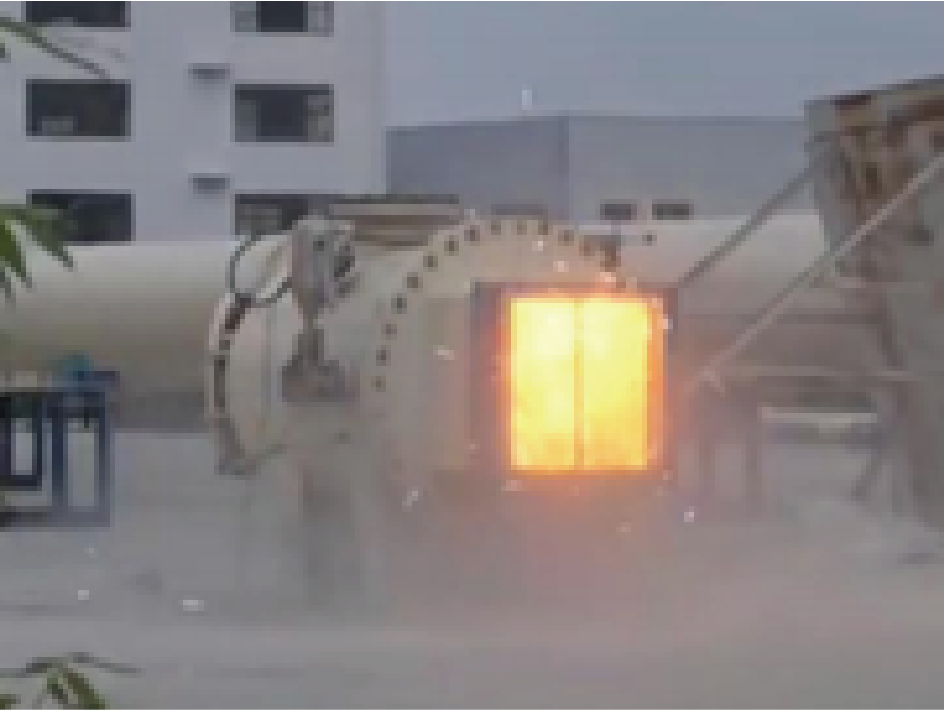
The conventional explosion-relief solution for energy-storage cabinets or enclosures involves installing an explosion-relief panel on the top of the enclosure. For typical energy-storage applications, these panels are made of DVPU material. However, since the relief panel is permanently exposed to outdoor conditions—subject to rain, snow, hail, extreme cold, and intense heat—it is necessary to provide an external thermal insulation layer and a weatherproof protective cover. Unfortunately, once installed, this external protective layer protrudes beyond the top of the enclosure, increasing the risk of damage from collisions during transportation and on-site installation and assembly. This, in turn, leads to additional costs for the owner associated with replacing and maintaining the relief panel.
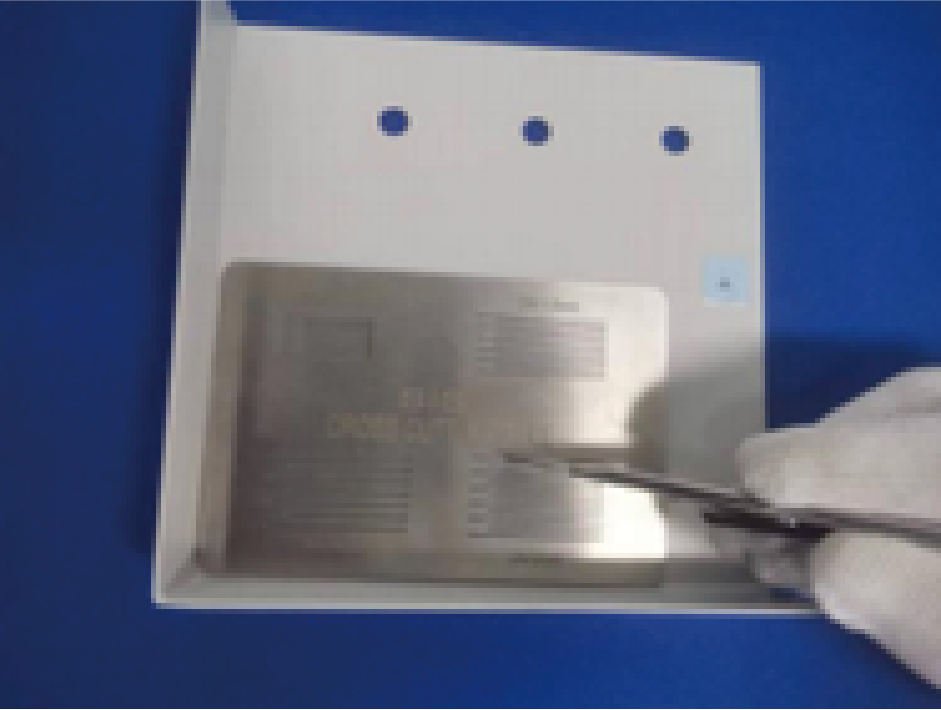
Compared with conventional DVPU explosion-relief panels for energy storage, the DVPN explosion-relief panel innovatively positions the thermal-insulation module beneath the relief panel—between the relief panel and the interior of the cabinet. This design significantly reduces the protrusion height after installation, by approximately 40 mm compared with the conventional DVPU explosion-relief panel for energy storage.
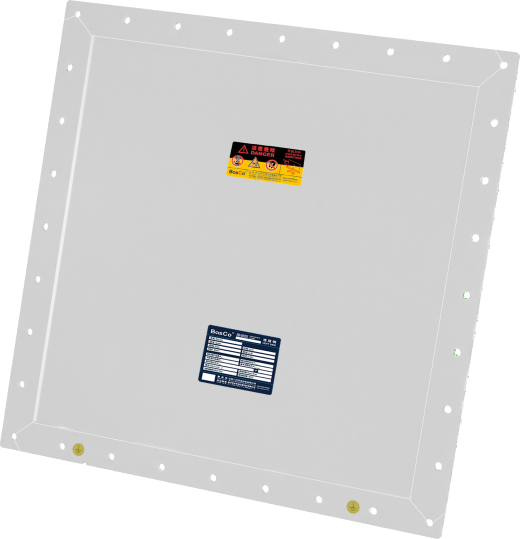

- Secured to the cabinet body with bolts, facilitating installation and maintenance.
- It is internally lined with thermal insulation cotton, providing the same thermal performance as the cabinet body.

Product Name | DVPNL |
Operating ambient temperature | -40℃ ~ +60℃ |
Static opening pressure | 0.01 MPa ± 25% at 22°C |
Vacuum/Back Pressure | -0.003 MPa |
IP rating | IP66 |
Work stress | 0.1 MPa(A) ± 2% |

- Single-layer SUS 304
- Silicone foam, UL94 V0 (-55°C ~ +200°C)
- Includes flange + silicone foam
- Thermal conductivity of thermal insulation cotton:
- ≤0.034 W/(m·K) (0℃)
- ≤0.039 W/(m·K) (40℃)
- Vibration-resistant design

Diameter (mm) | External dimensions (mm) | Relief area (mm²) |
230×305 | 330×405 | 68000 |
305×457 | 405×557 | 136000 |
400×400 | 500×500 | 160000 |
400×700 | 500×800 | 280000 |
457×610 | 557×710 | 274000 |
378×810 | 450×882 | 300000 |
457×762 | 557×862 | 341000 |
457×915 | 557 times 10 to the power of 15 | 414000 |
610×610 | 710×710 | 367000 |
610×762 | 710×862 | 459000 |
610×915 | 710×1015 | 552000 |

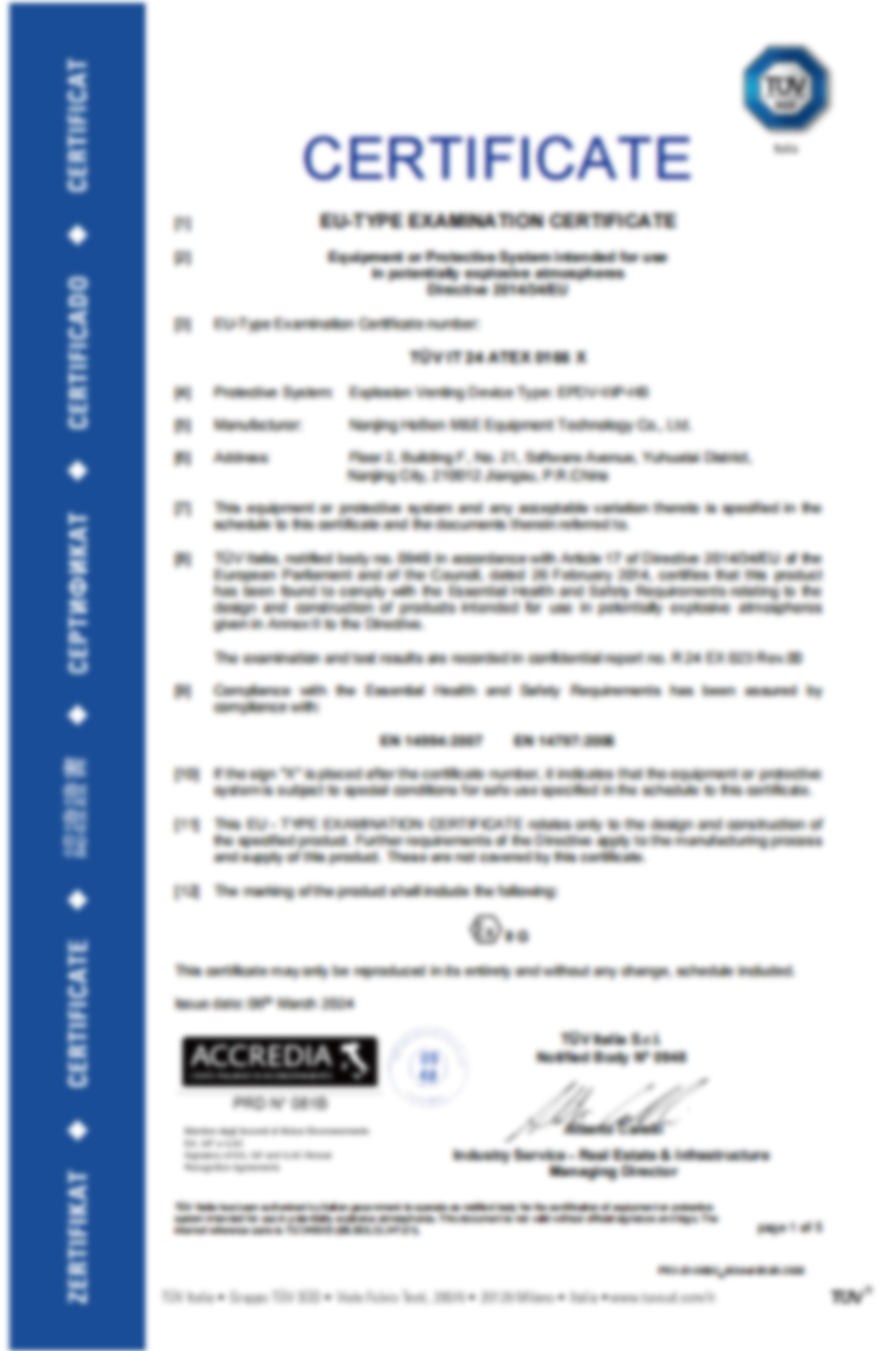
- EN14994
- EN14797
- NFPA68

First, select the type of explosion-relief panel product, and choose either top insulation or bottom insulation based on your requirements.
The thickness direction of the upper thermal-insulation venting panel extends above the mounting interface, providing superior and more reliable weather resistance and enabling long-term outdoor use. In contrast, the thickness direction of the lower thermal-insulation venting panel lies below the mounting interface, which helps save space above the enclosure, facilitating transportation and storage.
Secondly, provide the corresponding parameters and select the size of the pressure-relief panel through compliant calculations.


Application Scenarios
Project
Navigation
Contact Us
Address: 2nd Floor, Building F, No. 21 Software Avenue, Yuhuatai District, Nanjing
Copyright © 2024 Nanjing Heben Mechanical & Electrical Equipment Technology Co., Ltd. Technical Support:China Enterprise Dynamics Nanjing Digital Business Card