




Stay informed about the latest updates
15
2025
-
01
2025 at the Start: Where Has the Energy Storage Shake-Up Reached?
Author:
At the start of 2025, China National Nuclear Corporation HuiNeng and Xinhua Power announced the shortlisted bidders for their 2025–2026 centralized procurement of energy storage systems: Sungrow Power Supply, Haibosichuang, Chunan New Energy, Tiancheng Tongchuang, Wanbang Digital Energy, Xuchang XJ Electric Technology, and Ruipu Lanjun—seven companies in total.
At the start of 2025, China National Nuclear Corporation HuiNeng and Xinhua Power announced the公示 of the shortlisted bidders for their 2025–2026 centralized procurement of energy storage systems: Seven companies have made the shortlist: Sungrow Power Supply, Haibo Sichuang, Chunan New Energy, Tiancheng Tongchuang, Wanbang Digital Energy, Xuchang XJ Electric Technology, and Ruipu Lanjun.
The total procurement capacity for this energy storage system is 12 GWh, encompassing both 2-hour (0.5C rate) and 4-hour (0.25C rate) configurations, with no distinction made between air-cooled and liquid-cooled solutions, and suitable for both shared and integrated energy storage applications. The centralized procurement framework is valid until May 31, 2026.
According to the previous bid-opening records, a total of 65 companies participated in the bidding, with bid prices ranging from RMB 0.42 to RMB 0.53 per Wh and an average bid price of RMB 0.466 per Wh. The bid prices of the shortlisted companies this time range from RMB 0.44 to RMB 0.51 per Wh, with an average shortlisted price of RMB 0.4757 per Wh.
Price competition continues to unfold in the energy storage sector, as a reshuffling of the industry is underway.
On the one hand In the domestic large-scale energy storage equipment bidding market, the comprehensive strength of energy storage equipment suppliers is put to the test. There is already a certain degree of market concentration among the winning bidders, narrowing the room for new entrants to secure large-scale orders.
On the other hand, The pool of companies securing overseas orders is also narrowing, with most now being firms that have already built up substantial experience in international expansion or large corporate groups, where prior overseas expertise has become a key differentiator. Since the second half of 2024, several mega orders have emerged in overseas markets, predominantly secured by top-tier companies, further intensifying the Matthew effect in the energy storage sector.
The first round of reshuffling is underway.
Multiple indicators suggest that the energy-storage industry is undergoing its first wave of consolidation. Although numerous energy-storage integrators and battery manufacturers have already exited the market in 2024, supply-demand imbalances persist as a structural issue.
The root cause remains the imperfect revenue model for energy storage, with most projects relying on mandatory co-location of storage with wind and solar power. Industry observers note that energy storage is currently a sunk cost, and its true value has yet to be fully realized.
GGII reports that in 2024, the CR10 for integrators and energy-storage batteries stood at 82% and 94%, respectively, and forecasts that integrator market concentration will further rise to over 85% in 2025.
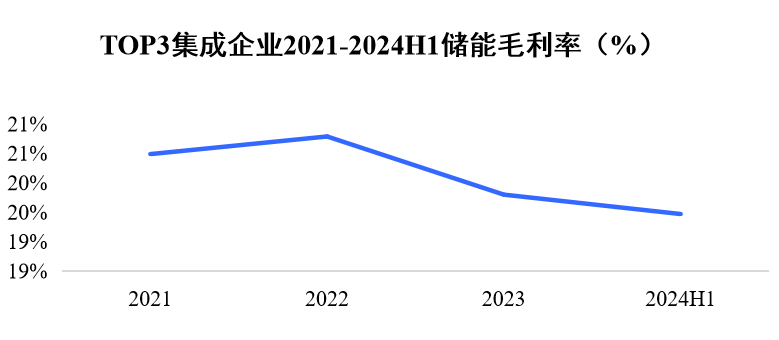
From the perspective of the three revenue streams for energy storage, neither electricity market trading, capacity leasing, nor policy subsidies can sustain the profitability of energy storage projects. Liu Qing, Chief Expert at the Electric Power Planning & Engineering Institute, points out that in the spot market, most provinces in China have a relatively small peak–valley price differential, limiting energy storage stations to only one charge–discharge cycle per day—typically during the low-demand midday period and the high-demand evening peak. In the capacity-leasing segment, short lease durations, significant price volatility, and a steady annual decline in actual leasing rates further exacerbate the challenges. Moreover, policy subsidies are inherently unstable. The phenomenon of “bad money driving out good” is particularly pronounced in China’s domestic tendering and bidding markets.
GGII research indicates that the breakeven point for energy storage is RMB 700–800 per MWh. However, in 2023, the average price differentials across various spot markets—including Inner Mongolia West, Shandong, Guangdong, and Gansu—all fell below the historical average. Moreover, this trend did not improve in 2024.
Overall, based on last year’s effective pilot programs in Jiangsu for peak-shaving and summer-demand management, it remains unlikely that energy-storage profitability will undergo any fundamental change nationwide in the short term.
Secondly, The capital-intensive nature of lithium-ion energy storage systems also limits the possibility of selling them at low prices.
If battery cells are not sold promptly after production, their performance degrades rapidly, and inventory costs are also high, so they must be cleared out in a timely manner. Consequently, companies would rather sell at a loss than halt production. An industry insider bluntly stated, Putting low prices above all else has even become the de facto “contract” between buyers and sellers, further fueling the price war.
It can be said that, Price competition has become a double-edged sword, inflicting varying degrees of harm on both the market and individual firms. While stimulating market demand, price wars will also accelerate industry consolidation. For companies with weak technological capabilities and poor cost-control abilities, low-price competition will exert immense pressure on their survival.
Case studies show that, in order to secure projects, some system integrators resort to extreme schedule compression and the submission of low-ball proposals, which leads to inefficient project development and even internal competition for orders.
In the short term, order volumes provide some firms with a breather. Over the longer term, however, these firms will face the risk of being forced out of the market.
In addition, Chinese companies, seeking to escape domestic involution, have increasingly “fled” overseas. However, foreign markets are by no means a safe haven. Unlike the domestic market, these overseas markets impose a product lifecycle liability regime that can span 15 to even 20 years, with lifelong accountability for any defects or failures throughout the product’s entire life cycle. The associated traceability and risk-management costs are extremely high, and inexperienced small and medium-sized enterprises are bound to pay a steep price for this. Even Sungrow Power Supply itself was hit with hefty fines in overseas markets during the early stages of the pandemic.
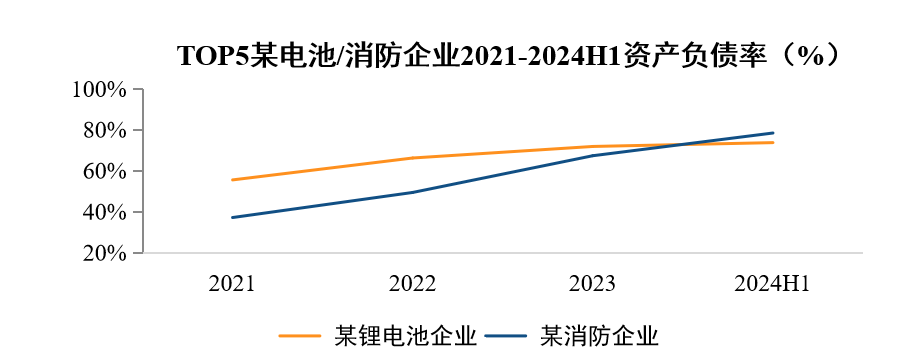
Overall, under irrational price competition, extended payment terms and low prices not only strain the cash flow of small and medium-sized enterprises, Integrators and the battery-cell segment face challenges due to the lengthy value chain, substantial R&D investment, and extended capital tie-up; even some of the top 10 players grapple with bad debts and high levels of debt.
Top-10 Battle Intensifies
Amid intensifying competition, the competitive landscape of the energy storage industry has undergone significant shifts. Although the top ten players have largely established their positions, emerging markets, innovative products, and novel business models are poised to become the next key battleground for companies.
GGII forecasts that competition among the top ten companies will intensify before 2025. Beyond the inherent advantages held by leading firms, the market shares of second- and third-tier players will continue to be subject to considerable uncertainty.
On the one hand, In order to address the “price-only” mentality that has given rise to oversized energy-storage projects, central state-owned enterprises have raised their procurement thresholds.
Public tender documents for 2024 reveal that the vast majority of projects require equipment suppliers to provide a 3- to 5-year warranty and O&M service for key equipment, such as batteries, energy storage systems, and PCS systems, with the 5-year warranty requirement notably higher than in 2023.
In addition, equipment suppliers are increasingly facing requirements for long-term maintenance services in overseas markets. For example, China Power Construction Corporation’s 2025–2026 centralized procurement of energy-storage equipment stipulates in the tender documents that bidders must undertake 20-year operation-period inspection, repair, and maintenance of the supplied equipment, covering all equipment inspections, maintenance, and battery replacements during the operational phase.
In addition, second-life batteries and factory-stock batteries are generally ineligible for participation in large-scale tendering and procurement markets. For example, China Power Construction’s 2025–2026 centralized procurement of energy-storage equipment stipulates that the battery production date must not be more than three months prior to the actual project delivery date; meanwhile, CGN has launched its 2025 framework procurement for energy-storage systems, which does not accept inventory batteries with a production date exceeding 90 days, nor does it accept second-life batteries.
The practice of winning bids through consortia, which was quite prevalent in 2023, has largely fallen apart. According to relevant statistics, in 2024, approximately 51.4% of the 35 projects did not accept consortium bids. In 2024, strategic alliances among industry leaders are more about resource reallocation than about securing individual contracts.
On the other hand, significant uncertainty still prevails in overseas markets. For example, both the European and Middle Eastern markets exhibit strong “resource substitution” characteristics.
Meanwhile, global industry giants are increasingly competing with Chinese companies. In the fourth quarter of 2024, Tesla deployed 11 GWh of energy storage systems, setting a new quarterly record for installations. Over the full year 2024, Tesla’s total energy storage deployments reached 31.4 GWh, doubling the 15.7 GWh installed in all of 2023 and establishing a new benchmark. Tesla’s “aggressive push” has also delivered a bigger blow to more Chinese giants seeking to expand overseas.
In 2025, the reshuffling of the energy storage sector continues to accelerate. For individual enterprises, 2025 is not only a year of significant opportunities but also a year of major challenges.
Source: GGII Energy Storage

undefined
Navigation
Contact Us
Address: 2nd Floor, Building F, No. 21 Software Avenue, Yuhuatai District, Nanjing

Copyright © 2024 Nanjing Heben Mechanical & Electrical Equipment Technology Co., Ltd. Technical Support:China Enterprise Dynamics Nanjing Digital Business Card